Diabetes P Words

I heard a quote the other day and I am about to butcher it. But it went something like this:

Patience and persistence are more important than perfection.

I tried to google the quote, but couldn’t find the exact one I heard. There were several similar ones, though, and they also included words like perseverence and passion.

I think these P words really sum up how we manage diabetes: we don’t have to see perfection, in fact, it may be impossible to do so. But with patience and persistence, we can take care of ourselves and achieve results that allow us to be healthy and successful and productive, which lead to powerprogress and endless possibilities.

Posted in about diabetes | Tagged , , , , | Comments Off on Diabetes P Words

Clean and Dry

Have you ever gotten a random reading when you checked your blood glucose? When this happens to me I usually wash my hands, dry them, and try it again. If I get a crazy high reading that makes no sense, I assume I had something on my finger (jelly, juice, remnants of fruit, other??).

I always tell my patients to make sure their fingers are “clean and dry” when they poke them for a blood sample. There has even been research that showed that clean fingers give more accurate results with blood glucose monitoring. I love this kind of study – reminds me of the ones that were done looking at the rate of infection for people who inject through clothing or reuse syringes (no difference in infection rates). So, according to scientific research, if you wash your hands before you check your blood glucose, you will achieve more accurate results. Makes sense.

Clean and dry fingers also lead to less pain and less risk of infection. If your fingers are covered in dirt (just came in from gardening, perhaps), be sure to wash first. And just a tip (no pun intended), be sure to keep away from lemon juice when poking fingers. It really stings!!

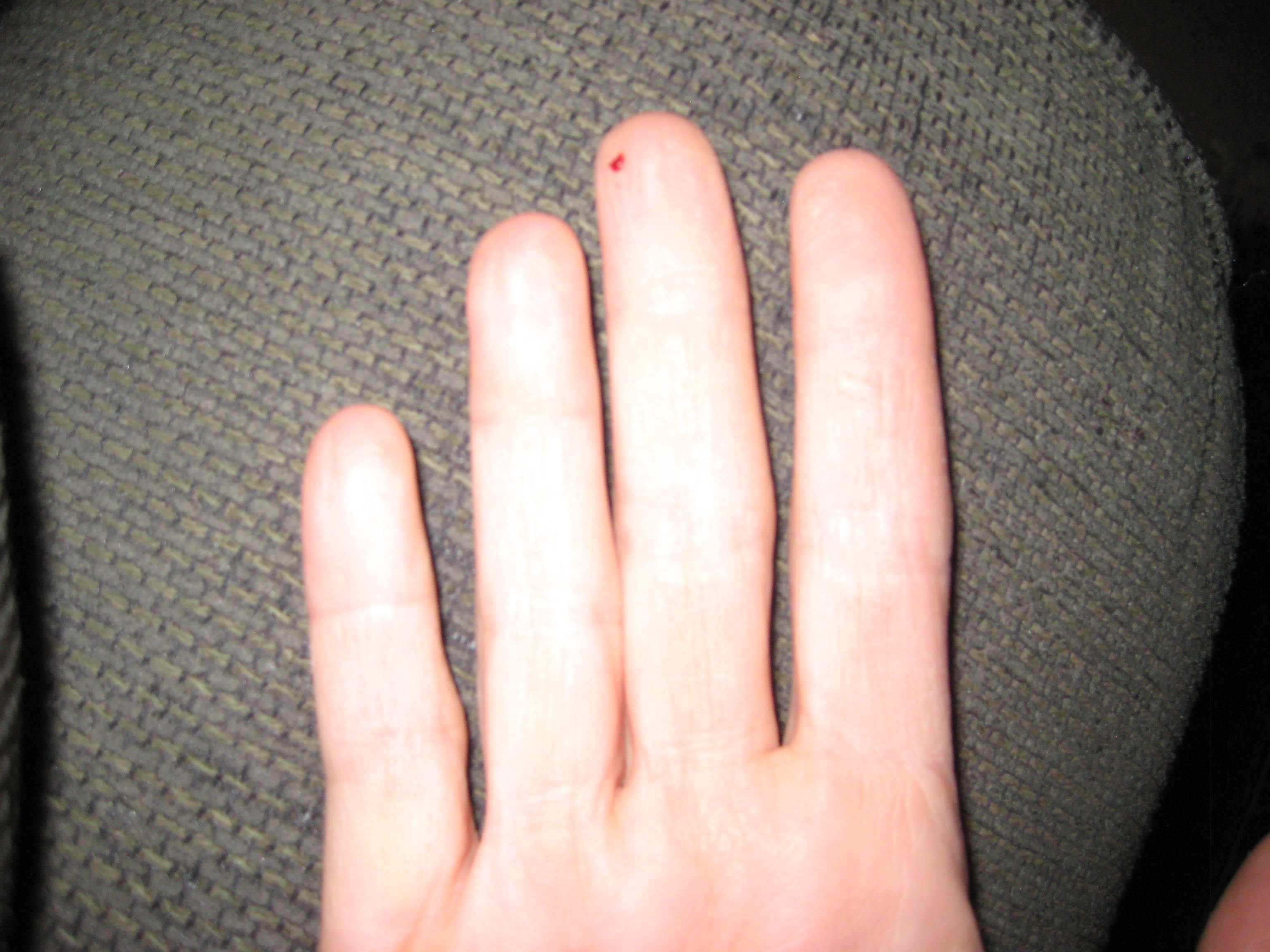
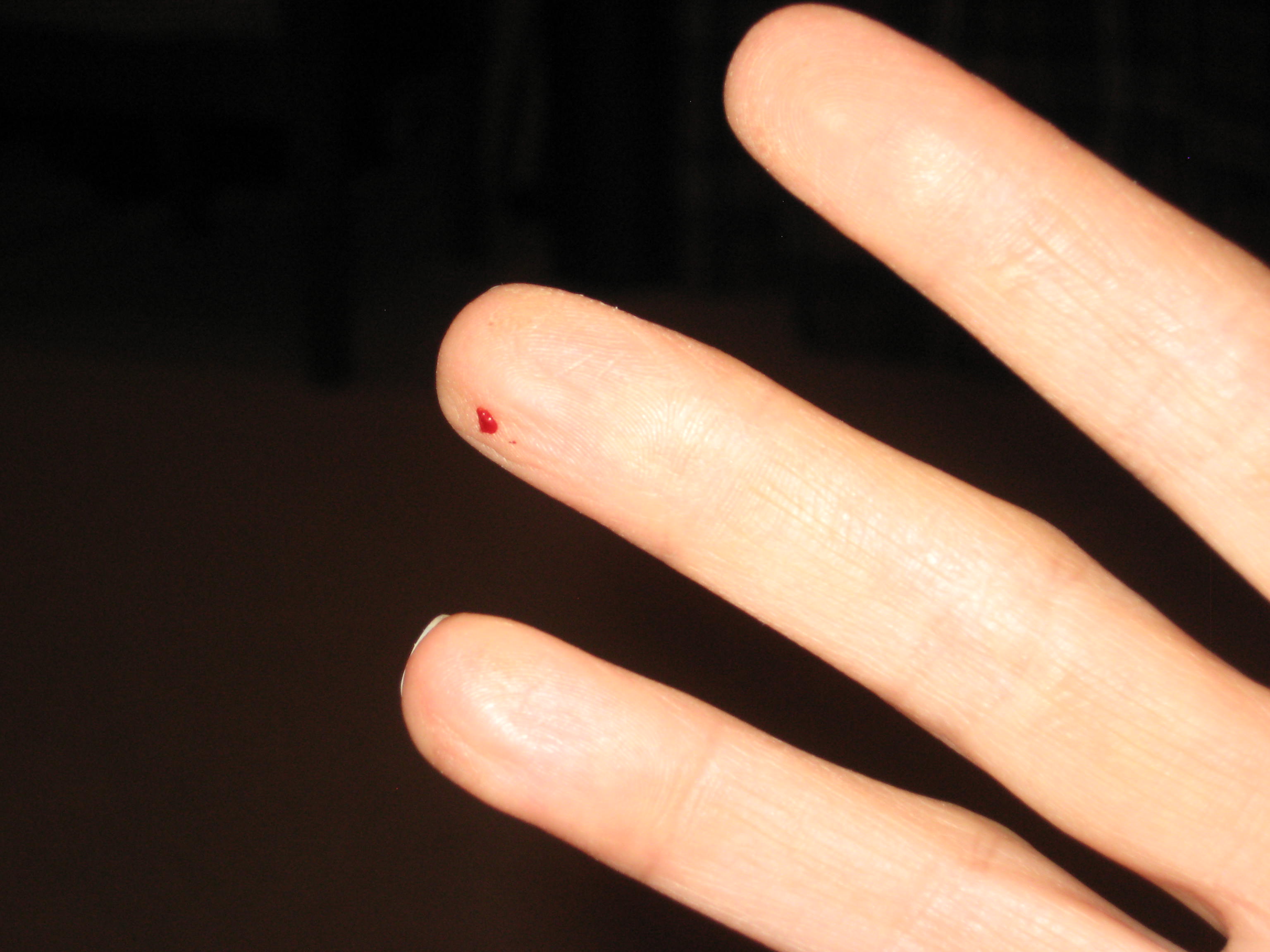
Most people have heard by now that it hurts at least slightly less if you use the sides of your fingertips. The very tips and pads of your fingers are where the nerve endings are located, so they hurt more. Some people have a nice little dimple in the spot that’s ideal for poking.

Also, be sure to rotate fingers. I use both sides of every finger except my thumbs and the outside of my pointers. I rotate back and forth, and despite poking my fingers up to 12 or 20 times per day (ok, 20 was happening more when I was pregnant than now), you really can’t tell that I poke my fingers. Another trick is to use a good cream on your hands every day, which keeps away calluses and rough looking fingers.

Care to share any good stories or recommendations about fingertips??

Posted in diabetes care | Tagged , , , | Comments Off on Clean and Dry

Diabetes Terminology Part 1

I have a tendency to get stuck on terminology, and the word “control” bothers me. Maybe it’s because I’m a control freak. But in a good way. Actually it’s because, when referring to diabetes, it’s just not relevant. There are many things in life that we can’t control, and diabetes is one of them. Instead, I prefer to say “manage.” It just feels more positive and do-able to me. I can definitely manage diabetes and I do it every day.

Something I’ve noticed a lot as I’ve read posts about diabetes are words like “fight” and “battle” and “enemy.” I am not making this up: I have never approached diabetes as my enemy or as a battle that I have to fight. Please don’t think I’m being PollyAnna-ish. I believe that we choose our attitudes and the outcomes of those attitudes. If we choose to think of diabetes as a battle we have to fight, I truly believe it will be just that.

I know many people despise hearing diabetes compared to things like cancer, and as a rule I don’t play the comparing game. But just for a minute, I let myself think about life with cancer (I spent some time working with kids who had cancer) and I believe it is a win-lose battle. There are now types of cancer that are more chronic diseases than acute diseases – thanks to much research, etc. But when we think of cancer we still think of life and death. And we think of fighting a battle against an enemy. And we think of all those people who have conquered that enemy and put it behind them. And those who lost.

What works for me is to manage diabetes. I make it part of my day, every day. But it’s not the most important part. My family, my job, my interests, my life are all more important. By managing my diabetes, I can keep all of that in perspective and focus on the most important things. Yes, there are moments when I have to put diabetes first. There are also moments when I have to put other things – that I wouldn’t have chosen to – first.

In no way do I discount how hard it is to manage diabetes – whether for oneself or a loved one. I am not saying that we have to like diabetes or that diabetes has to be our “friend.” I’m certainly not saying that there aren’t frustrating moments. I am just suggesting that our approach – our attitude – can make all the difference. If we try to “control” diabetes, there’s a good chance we’re going to feel out of control much of the time, and I just don’t have time for that.

Posted in about diabetes | Tagged , , | Comments Off on Diabetes Terminology Part 1

(Diabetes) Parents of Steel

I have a friend named Tessa, who was diagnosed with type 1 diabetes when she was 8 years old. Like many kids with diabetes, she and her parents took it on – she’s now 16 and on a pump, etc. Last month Tessa’s parents sent her to Tanzania and Turkey on a  month-long journey that included trekking and doing service projects, with a group from her high school. Tessa and 12 other teens stayed with host families, camped and stayed in hostels. She managed her blood glucose, insulin doses, food, and activities independently. And this was not the first time Tessa has done something like this. In 2010, she went to Bolivia and traveled from the Andes to the Amazon! In addition, she has gone on several camping trips without her parents.

I saw Tessa and her parents a few weeks ago, and although she looked tired, she was in one piece and reported that she had an amazing time. I commended Tessa for taking care of herself on a trip abroad. Even more, I praised her parents for having the courage and strength (and trust) to send her. My kids do not have diabetes, and I’m not even comfortable flying them to the east coast alone on a non-stop flight (sorry Nana and Papa), let alone to a foreign country (or three). I’m working hard to be the kind of parent who will be able to do that one day, however.

One of the downsides to all the intensive management tools we now have is that we know too much!! How can a parent let go long enough to not watch the continuous glucose monitor or check the pump settings? When I was 18 my parents let me go to Mexico with three high school friends. The parents who were supposed to be in charge ended up taking their son back to Arizona for an emergency appendectomy, so suffice it to say we were on our own. I managed my diabetes with a very old-fashioned blood glucose meter and injections. The hardest part was not really knowing what was safe to eat and then dealing with severe dehydration after I got struck with Montezuma’s Revenge. I will always be grateful to my parents for giving me the independence to go on that trip. I can’t imagine how scary it must have been for them, but we all did just fine!

Here’s to all the parents who are raising kids with diabetes – guiding them and supporting them through good and bad times; highs, lows, and target blood glucose levels; mood swings and stable moments. Thanks for your hard work; for dealing with frustration; for treating your kid(s) with diabetes just like your kid(s) without; thanks for being the brains and the pancreases; thanks for teaching your kid(s) how to take care of themselves and become independent when the time is right and for trusting them to go out into the world on their own and succeed!

Posted in diabetes support groups | Tagged , | Comments Off on (Diabetes) Parents of Steel

DSMA (diabetes) blog carnival

I have to admit, this blogging thing is a lot easier for me when I have an assignment. This month’s assignment from the Diabetes Social Media Advocacy Blog Carnival is as follows: What is a funny diabetes experience you had with a Person Without Diabetes / supporter / T-3?  Parents of CWd’s, please share your experience.

At first I was a little stumped by this one, since I already posted my two funniest non-diabetes people moments during dblog week. But then I remembered the date. This has actually happened twice. I was on a date with a really nice guy who was supportive and kind about the diabetes thing. At dinner he said, “Why don’t you check my blood glucose?” The first time it was just the two of us at dinner; the second time we were on a “double date.” When I went to the bathroom (I’m told) my date told the other couple that I was taking insulin. When I got back to the table, he said, “check mine so I can show them what you do.” I did and sure enough, his blood glucose level was high (in the 200s both times). UGH. I vowed never to do that again, which is not a problem since the second one was my husband!

This post is my May entry in the DSMA Blog Carnival.  If you’d like to participate too, you can get all of the information at http://diabetessocmed.com/2011/may-dsma-blog-carnival/

Posted in about diabetes, diabetes blog | Tagged , , , | Comments Off on DSMA (diabetes) blog carnival

Diabetes & Avocados

Everyone is encouraged to make healthy food choices, and people with diabetes happen to have a little extra motivation for doing so. Today, Hope Warshaw’s tweet brought to my attention the fact that Subway is jumping on the avocado bandwagon. I was very proud when later I heard on the radio “guess what bandwagon Subway is jumping on” and I knew the answer!

Anyway, avocados are incredibly healthy. My relationship with avocados is a short one. I only started liking them in the past five years. The turning point for me was guacamole in Mexico. Wow. In the past three years I’ve even started putting slices of avocado on sandwiches and in salads. Trust me, three years ago I NEVER would have done that. When my kids were babies, all the other parents around me were feeding their kids chunks of avocado and I could not even imagine doing that. Now I so wish I had branched out a little.

I am constantly telling patients about the benefits of plant-based fats and the dangers of animal-based (and chemically altered) fats. To translate: fats that come from animals are saturated fats. Saturated fats include butter, cream, cream cheese, fat-containing milk, etc. Saturated fats lead to increased cholesterol levels and heart disease.

Fats that are chemically altered are called trans fats. Studies show that trans fats are even worse for our bodies than saturated fats! Mono and polyunsaturated fats, on the other hand, are good for us (in moderation). These fats come from plants: nuts, olives, olive oil, and avocados are good sources. Here is an article that provides nutrition information about avocados.

If you don’t like avocados, consider giving them a/another try. If you already like them, keep eating them! Give them to your babies (when they are old enough to chew)! I learned how to make guacamole last year and here’s the recipe I was given:

Avocados (cut in half and use a spoon to remove the useful part, throw away the pit); cumin; garlic powder; diced tomatoes and red peppers. Smash them all together in a bowl or using a mortar and pestle. I love to dip raw veggies in guacamole, so don’t think it only goes with tortilla chips!

Kerri of SixUntilMe had another great avocado idea. The options are endless – please share some of your favorites!

Posted in about diabetes | Tagged , , | Comments Off on Diabetes & Avocados

Diabetes Guilt: Part 2

Yesterday I wrote about Diabetes Guilt, a crippling complication of diabetes. How was that for dramatic? But it really can be. Guilt leads to anger, and anger leads to a very negative attitude toward diabetes. This can zap one’s motivation, which in turn can lead to avoiding or neglecting diabetes management tasks. Today I discovered that I clearly was not finished writing about diabetes guilt.

Guilt is also a form of stress, which raises the blood glucose level. How’s that for defeating our purpose? So guilt leads to anger, which leads to resentment, which leads to a negative attitude, which increases stress, which leads to poor diabetes results (elevated blood glucose level, mood swings, etc.).

One of the best ways to decrease diabetes stress is to find a health care provider who is a good fit. There are many great providers out there who do not inflict guilt on their patients and their families. Do yourself a huge favor and work with one of them. In a perfect world, no one with diabetes (or their families) would ever feel judged, shamed, or guilted about their diabetes management and this blog post would be unnecessary. In the meantime, we have to do what we can to rid our lives of this useless thing (guilt).

Another factor that contributes to guilt is fear. It is my belief that most often when someone (parent, spouse, etc.) lays on the guilt (“should you be eating that?“), they are doing it out of fear. They are afraid that their loved one will develop complications or worse yet, die from diabetes down the road. Too many times I have seen people with diabetes rebel under the pressure of guilt, which can actually lead to worse outcomes.

Please don’t mistake not caring for not experiencing guilt. I believe these are two completely different things. I care a great deal about my health and my diabetes management, and I don’t succumb to guilt. As I mentioned yesterday, I separate myself from the disease and the numbers. Diabetes is just one thing about me and the numbers are just numbers. They don’t reflect who I am as a person.

How do you avoid feeling diabetes guilt?

Posted in about diabetes | Tagged , , , | Comments Off on Diabetes Guilt: Part 2

Diabetes Guilt

Having participated in the D-Blog Week that ended last Sunday, I definitely noticed a theme: guilt. Many, if not most diabetes bloggers brought up guilt at one time or another during the week. This made me really think about diabetes and guilt.

First, I tried to figure out where this guilt comes from. It seems to me that it has to come from someone other than the one with diabetes. Guilt is something that is caused by judgment from another person. We may superimpose that judgment on ourselves, but it has to originate somewhere outside of us. Did someone make us feel bad for eating something or for having a certain blood glucose level? Did someone threaten us with having to take insulin “if we don’t get our act together?” or with complications, or with our unborn fetus having problems?

I then thought about whether I experience this phenomenon. I am happy to report that I do not. I did at one time, however. I am not exactly sure when I let go of the “diabetes guilt,” but I can say with confidence that when I see a high number on my meter I don’t feel guilty. I truly use it as information to make a decision. And if I decide to eat something that will inevitably raise my blood glucose – that’s my choice and I know how to deal with it.

It’s important to really know ourselves when we live with a chronic condition. We need to know how we handle different situations and we need to understand where our responses originate. Through this knowledge we can make changes or adjustments in how we deal with numbers, and the rest of life with diabetes.

Finally, our attitude is critical. With a positive attitude we can ward off guilt. A positive attitude doesn’t have to come off as fake or phony. It can be a practical approach: treating numbers as numbers (not good or bad) and making choices in every aspect of diabetes management. Guilt can’t make anything better and it can’t change anything, but it certainly can drag us down. For me, it’s much more productive and fun to be in charge and to be positive.

Posted in about diabetes | Tagged , , , | Comments Off on Diabetes Guilt

D-Blog Week Recovery

Last week I participated in D-Blog Week. All diabetes bloggers who were interested posted daily on an assigned topic. I got so excited about the blogging thing that I even tried to load some fancy options on my blog. I failed, and got some weird code instead of my sidebar. But it’s fixed – thank you Justin! Although D-blog Week was a great experience, I have to admit it’s taking me a while to recuperate.

Until I get the energy to start blogging again (soon, I promise), I will leave you with a random question:

Why are there no vegetables on a Caesar Salad? I never order a Caesar Salad because I like salads that are loaded with veggies and Caesar Salads are basically lettuce and dressing (plus or minus croutons). Maybe I’m missing something – please share if you know the answer. Also, please share if you know a place that serves Caesar Salad with veggies!!

Posted in diabetes blog | Tagged , , | Comments Off on D-Blog Week Recovery

D-Blog Week Day 7 – what I’ve learned

I am very new to the Diabetes Online Community (DOC). This week was an extremely good experience for me for many reasons.

  • I read posts on many blogs I’d never known about
  • I learned what others are experiencing in their diabetes lives
  • In many cases, I was impressed to see great attitudes!
  • I still can’t figure out where my blog fits in
  • I have snooped around some additional resources and still have lots of questions
  • I added a graphic to a post and photos to another post – for the first time
  • I blogged seven days in a row – for the first time (it was very nice to have topics assigned!!)
  • I learned about “lurkers” and other common terms used in this blog world
  • I laughed
  • I cried
  • I really enjoyed the experience! Thanks, Karen!
Posted in about diabetes, diabetes blog | Tagged , , , | Comments Off on D-Blog Week Day 7 – what I’ve learned